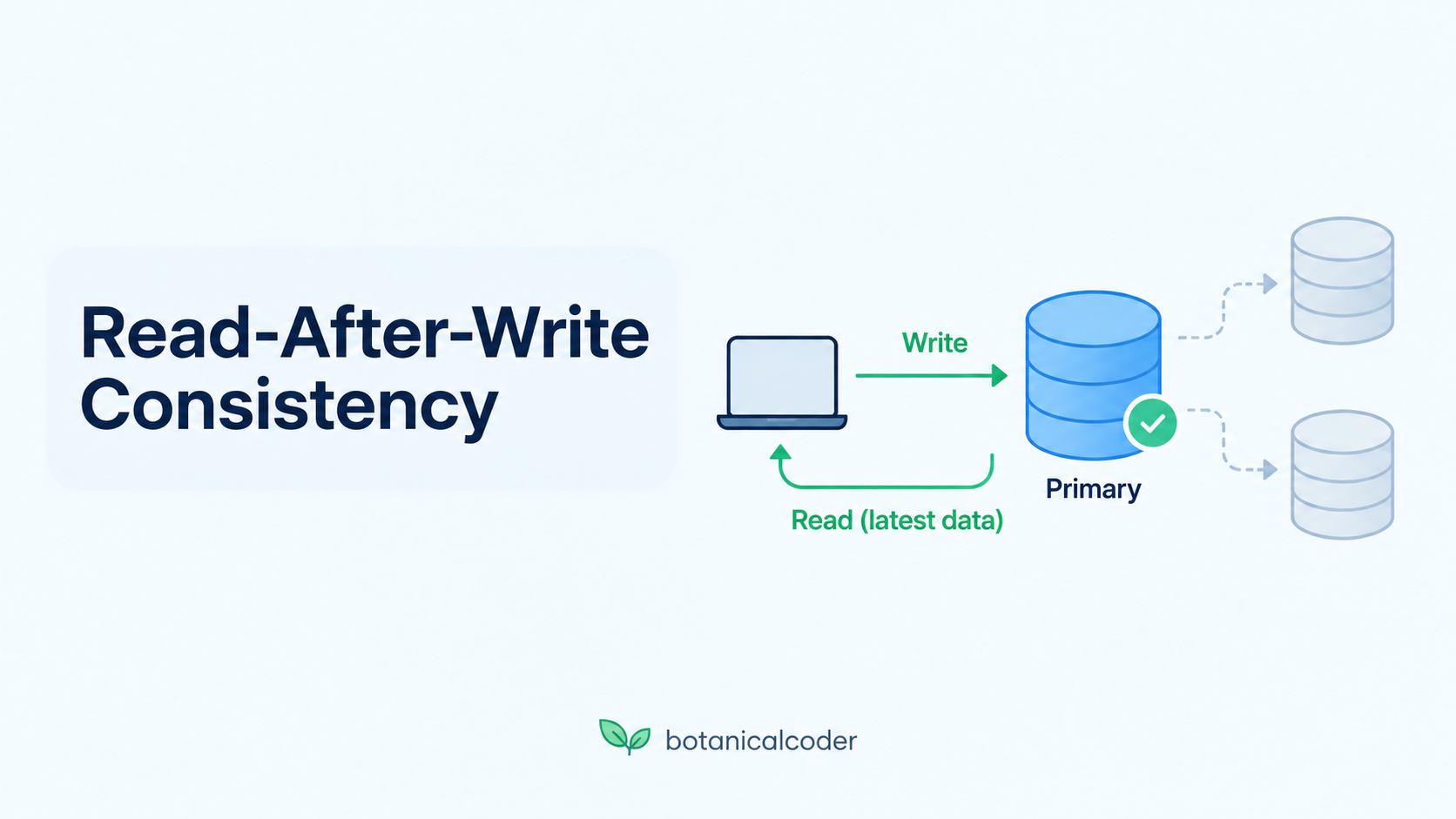
Read-After-Write Consistency
Read-After-Write (RAW) consistency, also called Read-Your-Writes consistency, means that after a user or client successfully writes data, an immediate read will return that new data or a newer version
Read-After-Write (RAW) consistency, also called Read-Your-Writes consistency, means that after a user or client successfully writes data, an immediate read will return that new data or a newer version
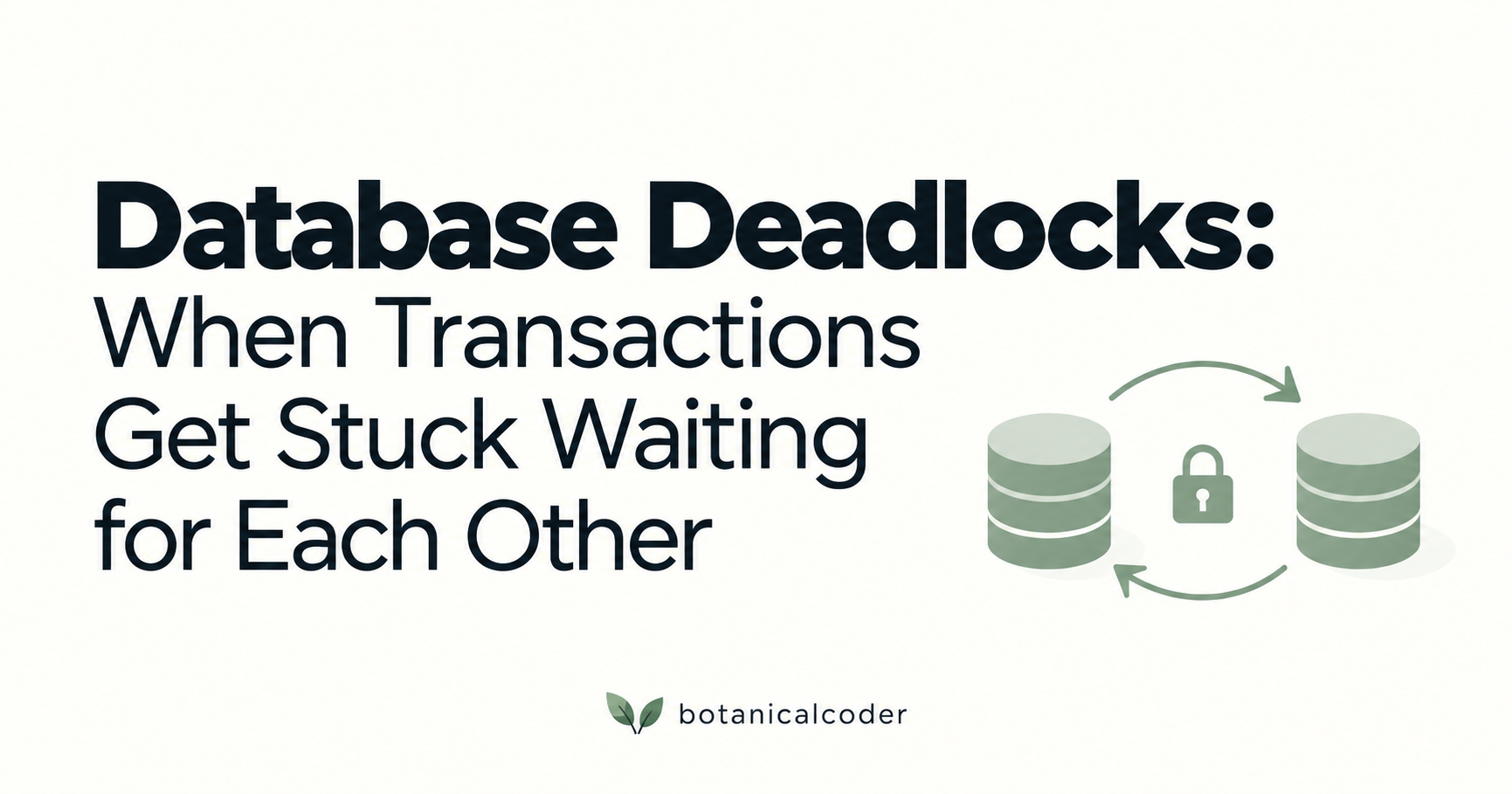
A database deadlock happens when multiple transactions are waiting for each other in a way that means none of them can continue. Each transaction may be perfectly valid on its own. The problem comes f
Idempotency and concurrency control are distinct backend design guarantees that solve two fundamentally different failure modes in distributed systems. Idempotency ensures that executing the same logi

The pattern: if (balance >= amount) debit() can fail under concurrency because the check and the subsequent debit are separate operations rather than one atomic check-and-act operation. It splits a s

Managing concurrent operations safely while maintaining performance is a central challenge of database engine design. Database engines achieve this using several core primitives and concurrency contro

Database concurrency issues happen when two transactions, each perfectly correct on its own, intertwine in a way that breaks data integrity or produces non-repeatable results. Many concurrency bugs oc

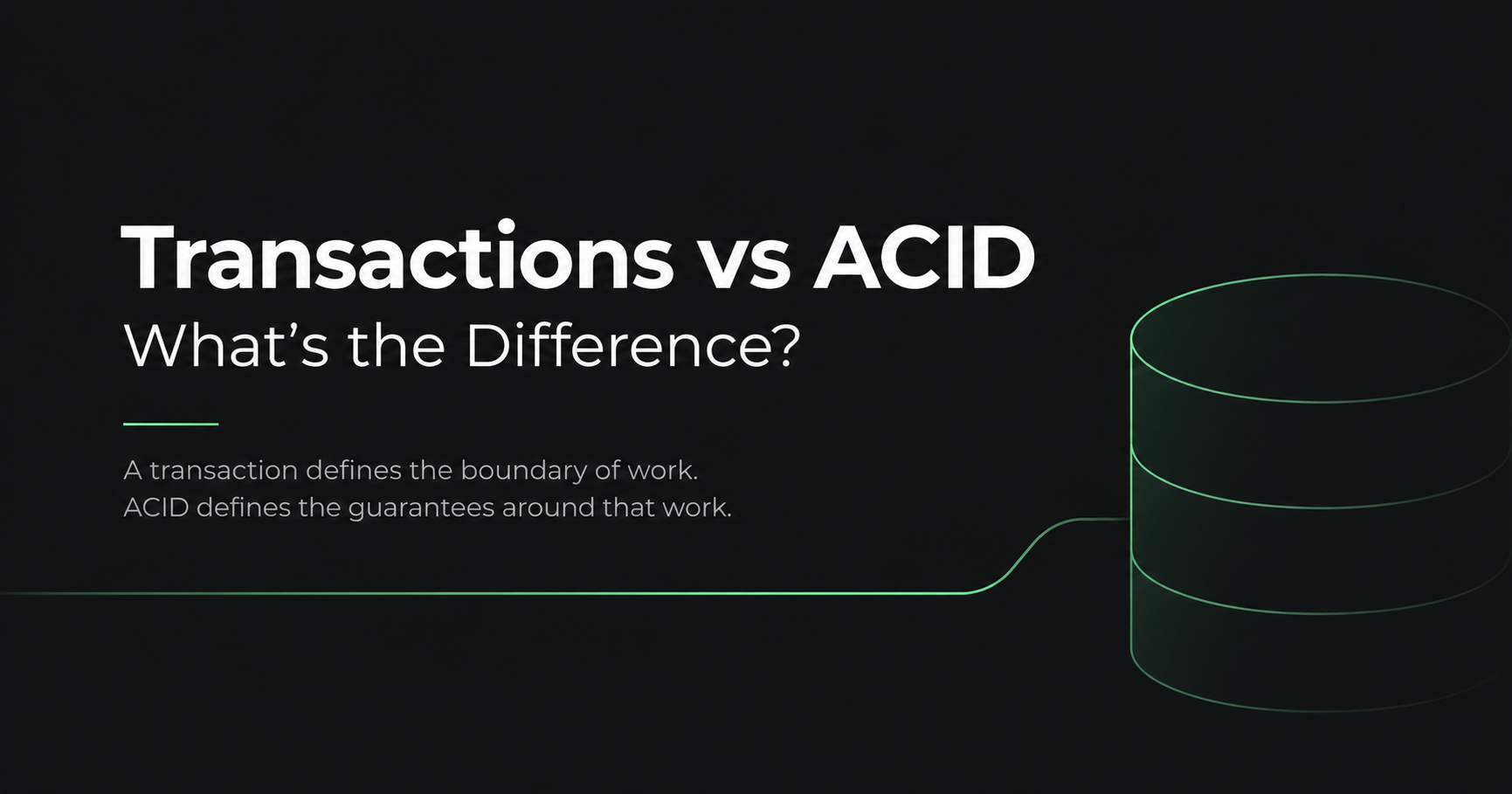
While we often use "ACID Transactions" and "database transaction" interchangeably, they refer to fundamentally different layers of database systems architecture: Database Transactions are the operatio
An important decision that is made during database design is the tradeoff between reducing redundancy to preserve data integrity (Normalization) versus accepting redundancy to boost read efficiency (D

Database indexes work like the index at the back of a textbook. Instead of scanning every single page (a full table scan), the database checks the index to locate the exact page (disk block) where the